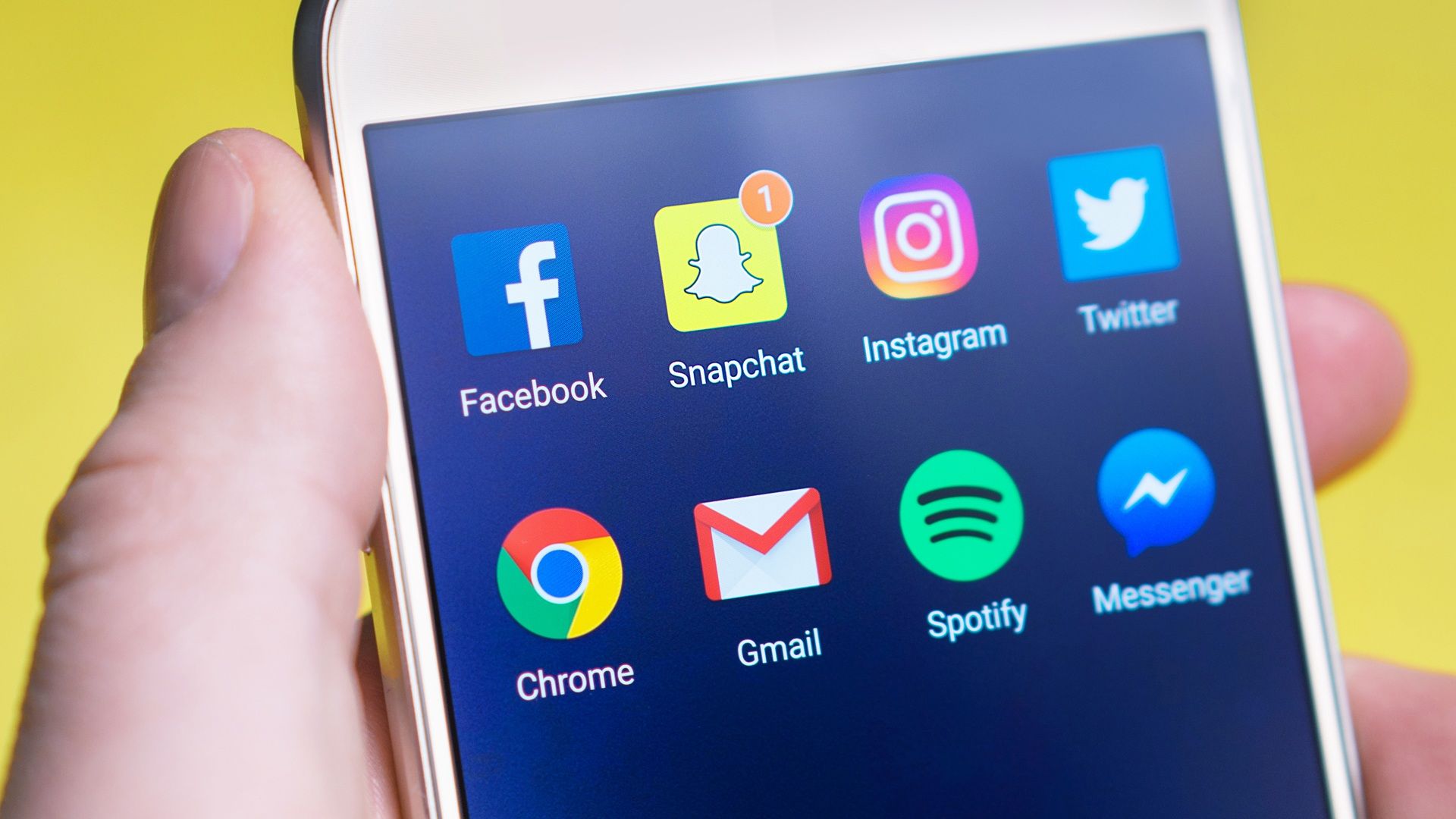
The notifications never stop. A new framework launches. A vulnerability gets patched. An acquisition shifts the competitive landscape. Another AI model arrives with a grand promise and a confusing name.
If you work in or around technology, you know this rhythm all too well. There’s a peculiar anxiety that comes with watching your feed scroll past, each headline a tiny reminder of how much you don’t know. The fear isn’t just about missing out anymore. It’s about falling behind. Becoming irrelevant. Being the one who hasn’t heard of the thing everyone else is already using.
Here’s the uncomfortable truth that nobody likes to admit: you are not meant to keep up with all of it. The people who appear to be on top of everything? They aren’t. They’ve simply gotten better at ignoring the right things.
The Myth of Comprehensive Awareness
Let’s start with a scenario. Imagine someone claims they read every important book published in a year. You’d find that ridiculous. There are too many books, across too many subjects, with too many pages. Yet we accept a similar premise for technology news without question.
The tech industry produces content at an impossible scale. Every day brings thousands of blog posts, hundreds of podcasts, dozens of product launches, and an endless stream of tweets from thought leaders who seem to have opinions about everything. Treating this as something to consume is a recipe for burnout.
What looks like comprehensive awareness from the outside is usually just a carefully curated filter. The people who seem most informed have usually chosen a few domains to watch closely and have made peace with being ignorant about everything else.
Why Your Current Approach Probably Isn’t Working
Most attempts to stay current follow a predictable pattern. You subscribe to newsletters, join Slack communities, set up RSS feeds, and maybe listen to a few podcasts. Then the volume becomes unmanageable. You start skimming. Then you start ignoring. Then you feel guilty about ignoring. Then you try a new system. The cycle repeats.
This isn’t a failure of discipline. It’s a failure of design. The problem isn’t that you lack willpower. It’s that you’re trying to drink from a firehose using a teaspoon.
The anxiety that accompanies this approach isn’t accidental. The attention economy is built on making you feel perpetually behind. Every notification is engineered to trigger a mild panic. Every “you might have missed” email preys on your fear of being out of touch.
Signals Versus Noise: The Real Distinction
One useful way to think about this is to distinguish between what I’d call signal and everything else. Signal is the stuff that genuinely changes how you work or think. Noise is everything designed to make you feel like you need to pay attention, even though nothing actually changes.
A framework update that introduces a genuinely new paradigm is signal. The same framework’s point release is probably noise. A major security vulnerability affecting millions is signal. The announcement of a vulnerability that hasn’t been exploited yet and affects only certain configurations is probably noise.
Most information lives in a gray area, but the principle holds. Before you engage with something, ask yourself: will this matter in six months? If the answer is no, you can safely let it pass. This simple question cuts through more clutter than any sophisticated filtering system.
Building Your Personal Filtering System
Effective filtering requires a few deliberate choices. Here’s what tends to work well in practice.
Choose Your Sources Narrowly
Instead of following fifty publications, pick five that consistently provide value. Instead of reading everything they publish, choose two that you read regularly and use the others as occasional reference. The specific sources matter less than the discipline of keeping the list short.
The best sources share a common quality: they don’t publish for the sake of publishing. They have editors who say no. They produce fewer pieces but with higher quality. Finding these requires some experimentation, but once you do, the signal-to-noise ratio improves dramatically.
Use RSS But Don’t Obsess
RSS feeds remain the most efficient way to read multiple sources in one place. Unlike social media algorithms, they show you everything in chronological order. But they can also become overwhelming if you treat them as a to-do list.
One workable approach: check your feeds once a day, quickly scan headlines, and mark everything as read. If something catches your attention, read it. If not, let it go. The goal isn’t to clear your feed. The goal is to let the feed serve you rather than the other way around.
Subscribe to Newsletters That Summarize
Some of the best sources are those that do the filtering for you. Good newsletters summarize the week’s developments in a few paragraphs, saving you from reading dozens of articles. They work because they respect your time rather than trying to capture your attention indefinitely.
The ideal newsletter is concise, opinionated, and occasional. Daily newsletters often become noise themselves. Weekly or bi-weekly digests tend to maintain higher quality because they’re not scrambling to fill space.
The Art of Just-in-Time Learning
Here’s a counterintuitive idea: the best way to stay updated is to not actively try. Instead, rely on just-in-time learning, where you acquire knowledge precisely when you need it.
This approach has several advantages. First, you’re more likely to remember information that’s immediately useful. Second, you avoid wasting time on topics that ultimately don’t apply to your work. Third, the information you learn is contextual, making it easier to understand and apply.
The discovery of an entirely new programming paradigm might be interesting. But if you’re not using it and don’t plan to, the time spent understanding it is probably better allocated elsewhere. If a problem eventually arises that this paradigm solves, you can learn it then, when motivation and context align naturally.
Making Peace with Perpetual Ignorance
This is the hardest part. Accepting that you will never know everything. That there will always be a new tool, a new framework, a new platform that other people are using and you haven’t tried. That being out of the loop on some things is not just acceptable but actually necessary for getting meaningful work done.
The developers who seem most productive aren’t the ones who know the most. They’re often the ones who have learned to say no to most things, to maintain focus on what matters, and to ignore the endless parade of new things that don’t actually make a difference.
There’s a phrase in product management that applies well here: “If everything is a priority, nothing is.” The same applies to technology. If everything is worth learning, nothing is worth learning well.
Practical Routines That Actually Work
A realistic routine might look something like this:
• Morning scan (10 minutes) : Quickly check headlines from two or three trusted sources. Read anything that seems directly relevant to current work. Flag one or two longer pieces for later reading if they appear genuinely important.
• Weekly review (30 minutes) : Read the summaries from a good newsletter. Pick one substantial article or technical paper to read carefully. Note down anything that seems worth exploring further when time permits.
• Monthly deeper dive (a few hours) : Focus on one area that appears to be shifting significantly. This might mean trying a new tool, watching a conference talk, or reading a series of posts on a particular topic. The key is depth over breadth.
This routine works because it allocates time for different types of engagement: scanning for awareness, occasional deep reading, and periodic exploration. It also has a clear endpoint, which prevents the endless scrolling that leads to burnout.
Leveraging Other People’s Filtering
One often overlooked approach is using other people’s expertise as your filter. This doesn’t mean following influencers blindly. It means paying attention to what people you trust and respect are paying attention to.
If three colleagues whose judgment you value are talking about the same tool, it’s probably worth investigating. If one person mentions something in passing and nobody else picks it up, it’s probably fine to ignore.
This is effectively distributed filtering. Instead of trying to evaluate everything yourself, you rely on the collective evaluation of people whose judgment aligns with your interests. It’s not perfect, but it’s significantly better than trying to go it alone.
The Long View
What matters most in technology isn’t the latest release. It’s understanding the underlying patterns that persist through the noise. The tools change, but the fundamentals shift slowly. Systems thinking. Architecture trade-offs. User psychology. These endure.
Someone who deeply understands these durable concepts will adapt to new tools with relative ease. Someone who focuses exclusively on tool-level details will find themselves perpetually playing catch-up.
The most effective approach, then, is to spend your limited learning time on concepts that have staying power. The specific tools can be learned when needed, and often more quickly than anticipated because the underlying principles are already familiar.
A Final Note on Anxiety
That unsettled feeling you get when you see a new technology you haven’t learned? It’s worth examining. Sometimes it’s legitimate: a genuine shift that requires attention. More often, it’s manufactured: engineered urgency designed to capture your attention and sell you something.
The technology industry benefits from your anxiety. It keeps you reading, buying, and clicking. Recognizing this dynamic doesn’t make you cynical. It makes you more capable of deciding what actually deserves your time.
