
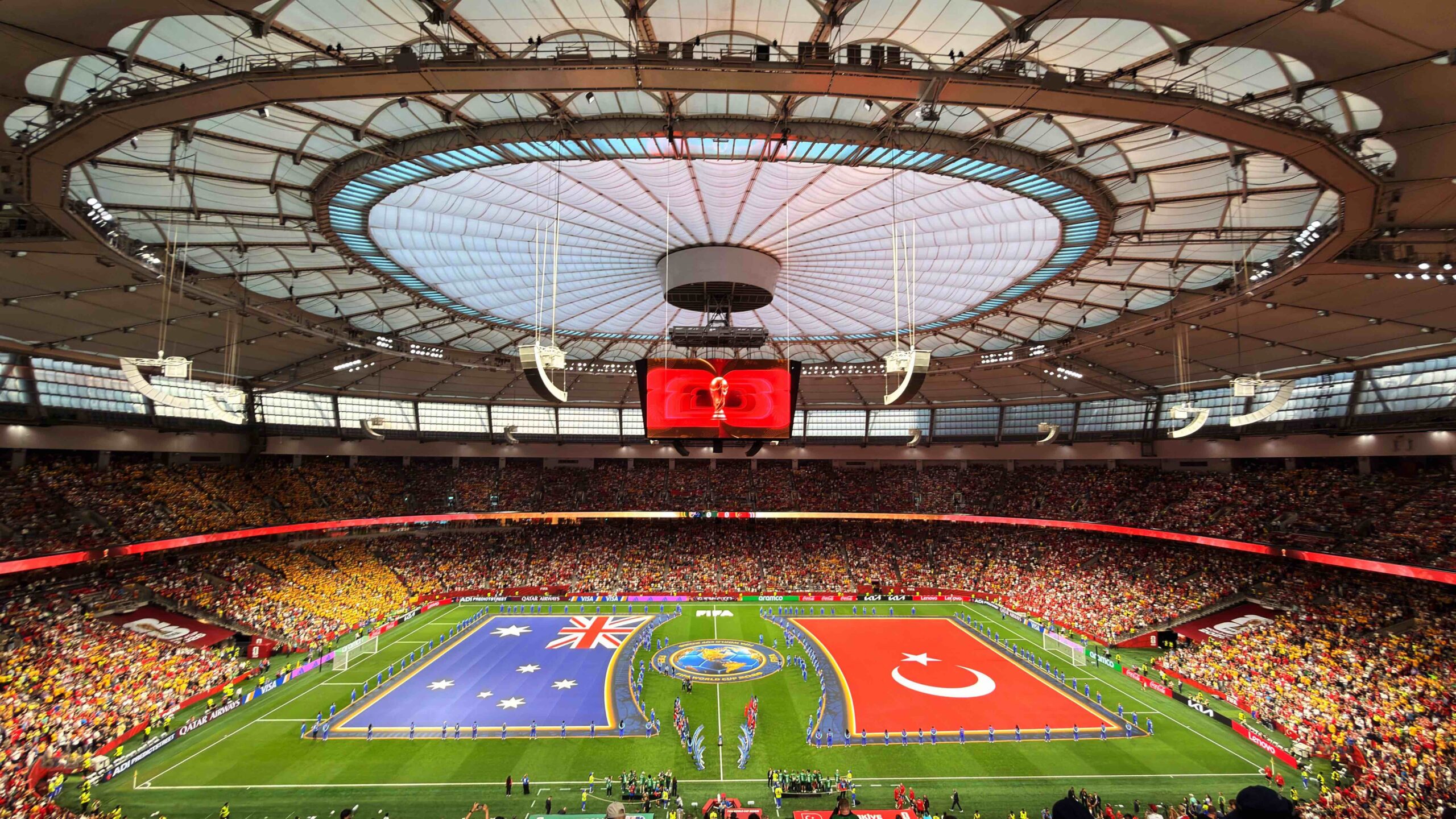
Before the first ball is kicked, before the records are set, before a new name is etched into football folklore, there’s the organization that makes it all possible. FIFA, the Federation Internationale de Football Association, has a story as rich and complex as the tournament it oversees.
From humble beginnings in a Parisian street to a global behemoth with more member nations than the United Nations, FIFA’s journey is filled with surprising facts .
Ten Surprising Facts About FIFA
- It Started with a Handful of Nations: On May 21, 1904, representatives from France, Belgium, Denmark, the Netherlands, Spain, Sweden, and Switzerland signed the founding charter. It was a group of “dreamers and visionaries” who dared to imagine an international football federation . Remarkably, a club, Madrid Football Club (now Real Madrid), represented Spain at this first meeting.
- More Members Than the UN: Today, FIFA has grown from those seven founding members to a staggering 211 member associations. That’s more than the United Nations, which has 193 member states. It’s a testament to football’s truly universal appeal .
- A Registered Charity: FIFA is registered as a charitable organization in its home country of Switzerland. This status, a relic of its early days as a small, voluntary group, has significant financial implications. It allows FIFA to pay little tax in Switzerland and to negotiate comprehensive tax exemptions from host countries for the World Cup .
- The Humble Beginnings of the “Golden Goose”: The first televised World Cup in 1954 was offered to broadcasters for free. Once FIFA saw the immense global audience, they realized the goldmine they were sitting on. By 1986, TV rights were a multi-million franc business .
- The Blueprint for Modern Sponsorship: In 1978, FIFA had to scramble to secure Coca-Cola’s advertising rights in Argentina. By advancing its sponsor money to buy the rights from the host nation, FIFA created the template for modern sports sponsorship, including exclusivity and global branding that defines it today .
- The Oldest Man to Score a World Cup Goal: This isn’t about a player, but about a referee. The official world record for the oldest person to score a goal in a FIFA World Cup match is held by a referee. Baffour Osei scored for Ghana in their qualifying match against Benin in 2006 at the age of 48.
- The “FIFA Logbook”: Before the digital age, FIFA meticulously tracked international matches in a handwritten logbook. This led to a match levy, where FIFA would take a cut of the gate receipts from international games to fund its operations .
- The Only World Cup Without a Final: The 1950 World Cup in Brazil is famous for the “Maracanazo,” but it’s also unique for not having a traditional final. The tournament concluded with a final group stage where Uruguay defeated Brazil 2-1 in a decisive match that felt like a final .
- More Teams Than Ever Before: The history of the World Cup has been one of expansion. From 13 teams in 1930, to 16, 24, and then 32, the tournament has grown to accommodate the sport’s global development. The 2026 tournament is the next, and biggest, step in this evolution .
- A 120-Year-Old Dream: The modern FIFA is based on a simple idea from over a century ago: to bring the world together through football. That vision, born in the mind of French journalist Robert Guérin, continues to drive the organization’s mission of making the beautiful game a “universal language” .
Why the FIFA World Cup 2026 Will Be Historic
The 2026 tournament isn’t just another World Cup. It’s a watershed moment that is rewriting the tournament’s rulebook. It is, by every measure, the biggest and most transformative edition in history.
The most immediate reason is the format . For the first time, 48 teams will compete in the finals. The tournament has been restructured, with 12 groups of four teams. This expansion has already had a visible impact.
The new format has created a fascinating dynamic in the group stage. Instead of just the top two teams qualifying, the eight best third-placed teams will also advance to a brand-new Round of 32 . This has led to some intriguing strategic play, where teams might settle for a draw that benefits both. The BBC noted that the lack of “real jeopardy” in some group-stage matches is a “flaw” that comes with the territory of having so many third-place teams qualify .
A Tournament of Firsts and Records
Beyond the format, the 2026 World Cup is setting records across the board.
- First 3-Nation Host: For the first time ever, the tournament is being jointly hosted by three countries: the United States, Canada, and Mexico . The US Senate even passed a resolution celebrating the historic significance of this “continental unity” . Matches are being played across 16 iconic stadiums in a partnership that exemplifies the cooperation between the three nations .
- An Attendance Record: Even before the knockout stages began, the tournament smashed the all-time attendance record. With over 3.6 million fans flocking to stadiums in the first two weeks, it surpassed the 3.58 million set by the 1994 US World Cup. The average stadium occupancy is an incredible 99.7 percent, driven by the huge capacities of NFL stadiums .
- Goals, Goals, Goals: The group stage alone saw more goals scored than the entire 2022 Qatar World Cup (which had 172). The average of nearly three goals per game is the highest since 1970, indicating a tournament defined by attacking, open football .
- Individual Brilliance: The tournament is already a showcase for football’s greatest stars. Lionel Messi has etched his name in history by becoming the first player to appear in six World Cups and is now the tournament’s all-time leading goalscorer with 18 goals . Cristiano Ronaldo also made history, scoring in his sixth consecutive World Cup . The stage is set for a knock-out round full of drama, unexpected results, and the crowning of a new world champion .
The 2026 FIFA World Cup is not just a competition. It’s a testament to football’s global power and a milestone that will define a new era for the sport.
